
The science behind KELOSCAR
Built on science. Designed to support recovery.
Explore the science behind KELOSCAR, the role of silicone gel technology, the benefits of TurmeromeCell™, and the supporting scientific evidence.
1 · Scars & clinical context
Scar formation and the importance of early intervention.
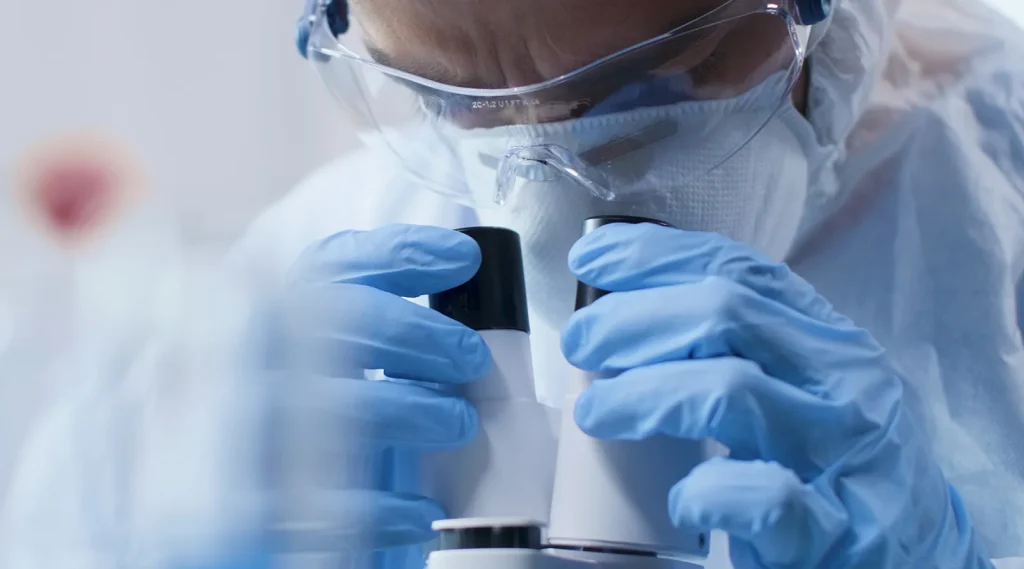
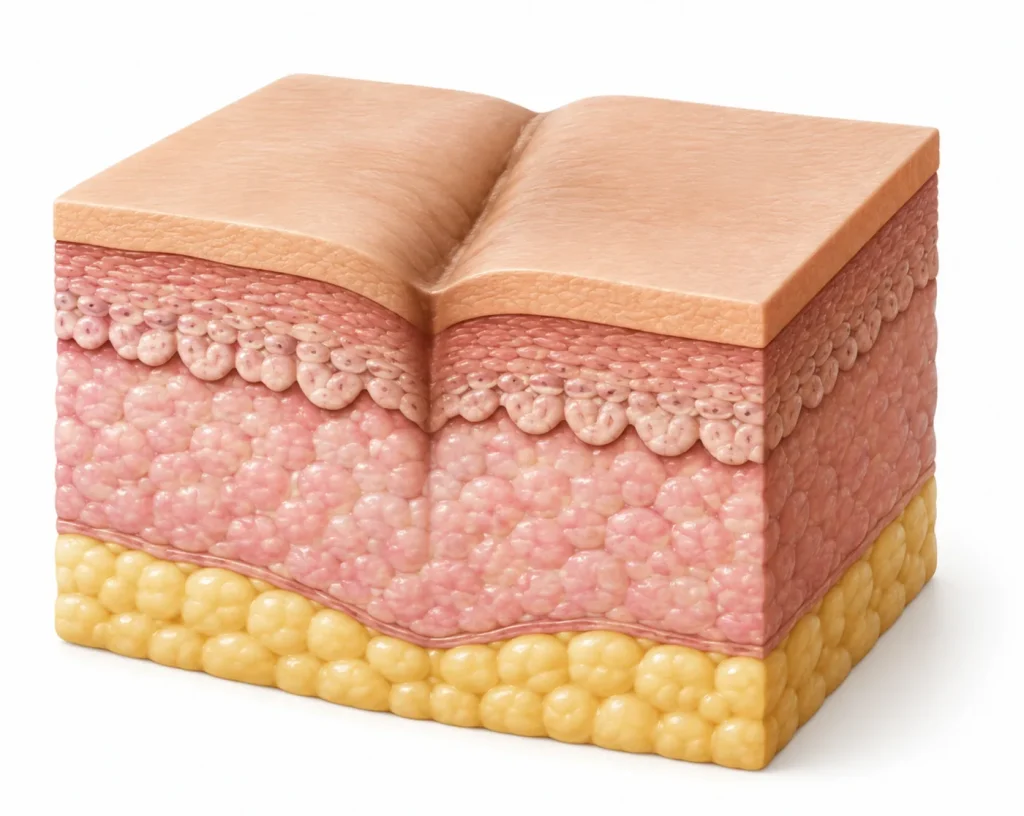
Scar formation is a natural part of the skin’s healing process, which occurs in four overlapping phases: haemostasis, inflammation, proliferation and remodelling. Although the skin’s protective barrier is restored, scar tissue differs from the surrounding skin, particularly in terms of collagen organisation, vascularisation and elasticity.
Disruptions in normal healing, such as persistent inflammation or excessive collagen deposition, can influence scar formation and appearance, resulting in raised, thickened or firm scars.
An estimated 100 million people in developed countries acquire new scars every year.
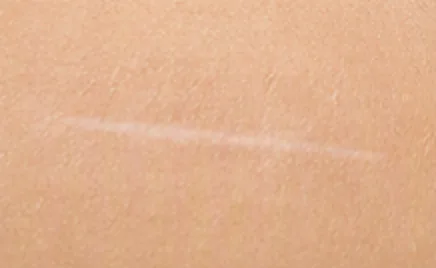
Mature linear scar
A flat, smooth scar that fades with time and becomes less noticeable.
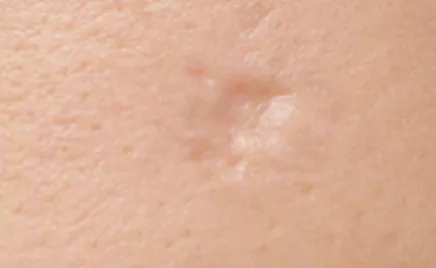
Atrophic scar
A depressed scar that occurs when there is a loss of tissue, causing the skin to appear indented.
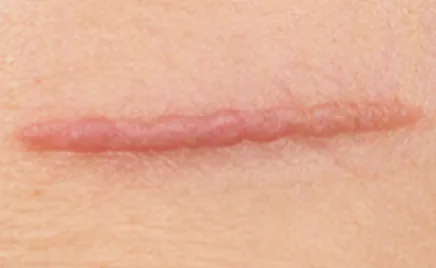
Hypertrophic scar
A raised scar that remains within the boundaries of the original wound, often red or pink in appearance.
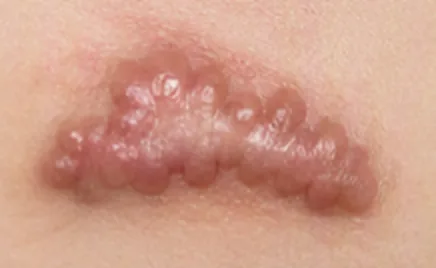
Keloid scar
A raised scar that grows beyond the original wound boundaries, often large, thick and irregular.
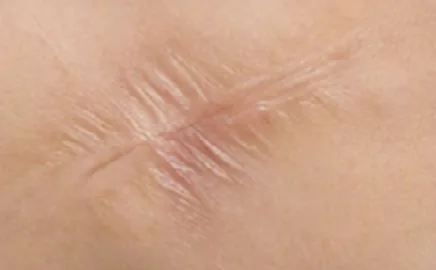
Contracture scar
A tight scar that can restrict movement, often caused by burns or large wounds.
Illustrative images: they do not portray real patients, actual clinical cases or treatment outcomes. Principal scar categories (Mustoe 2002; Monstrey 2014; Gold 2014).
2 · Silicone gel
Silicone gel: a first-line approach to scar management.
Silicone gel is a well-established, non-invasive option for scar management, recommended for use once the skin has fully healed. It forms a thin, flexible, semi-occlusive layer over the scar that:
- helps maintain skin hydration by reducing transepidermal water loss, the primary mechanism of silicone therapy through which silicone gel supports scar maturation;
- provides protection from friction, mechanical stress and external irritants;
- supports scar remodelling by maintaining a hydrated environment that may influence the biological processes involved in scar maturation.
International scar management guidelines recognise silicone gel as a first-line option for the prevention and management of hypertrophic scars and keloids, following complete skin closure.
3 · TurmeromeCell™
The role of TurmeromeCell™.
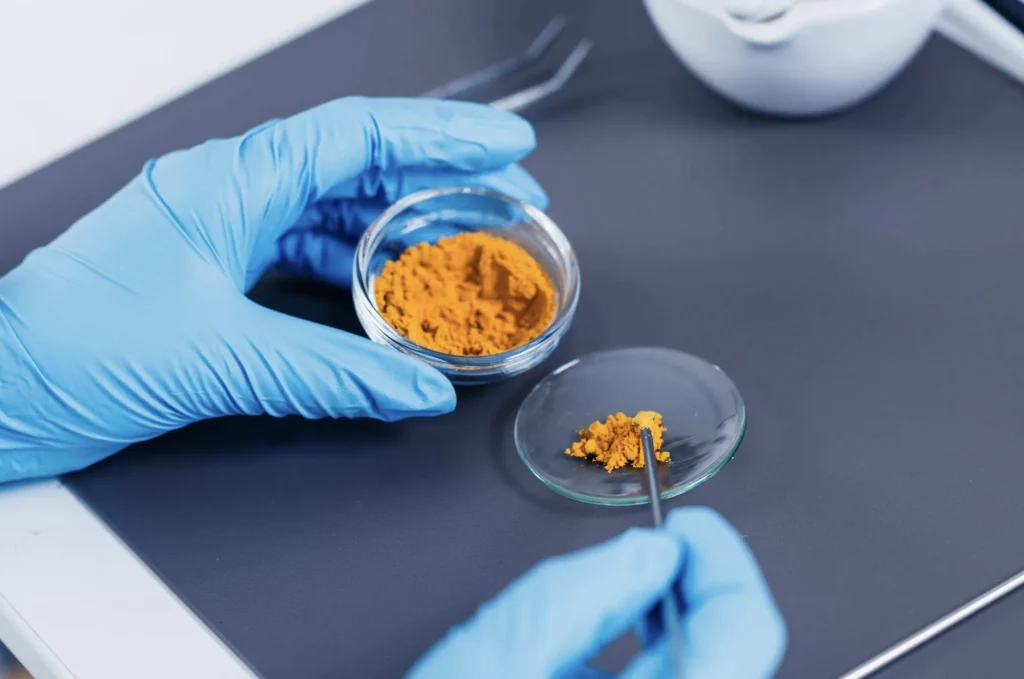
TurmeromeCell™ is a proprietary complex combining carefully selected components, including a liposomal cellular extract of Curcuma longa rhizome and vitamin E, for their antioxidant and skin-conditioning properties.
Integrated into KELOSCAR BIOGEL, it complements the protective action of silicone gel by helping soothe and condition the skin, while providing additional antioxidant support and promoting comfort throughout the scar management process.
4 · Synergistic action
Two technologies. One integrated formulation.
Medical-grade silicone
Primary physical action
Hydration & protection
Forms a thin, flexible protective film that reduces moisture loss and supports scar maturation.
TurmeromeCell™
Complementary support
Antioxidant support & skin comfort
Provides antioxidant and skin-conditioning properties that help soothe the skin and promote comfort.
KELOSCAR BIOGEL
Scar remodelling support & soothing comfort
Hydration, protection and soothing comfort in one formulation.
5 · Evidence highlights
What the clinical evidence on silicone gel shows.
7% vs 26%
Incidence of hypertrophic or keloid scarring after surgery with twice-daily silicone gel application, compared with no silicone gel use.
Signorini & Clementoni, 2007 · 160 patients
70–85%
Patients reported improvements in scar colour, pliability, height, itching and pain following silicone gel use.
Sepehrmanesh, 2006 · 1,522 patients
50
In a randomised, double-masked study involving 50 patients, scar segments with silicone gel application showed less redness, reduced height and greater pliability compared with placebo.
Chan et al., 2005 · within-subject comparison
Figures refer to published evidence on topical silicone gel therapy, not to a KELOSCAR-specific clinical study.
6 · International guidelines
Silicone therapy: a recognised first-line approach to scar management.
| Source | Recommendation |
|---|---|
| International Advisory Panel on Scar Management | First-line conservative therapy for immature, symptomatic or high-risk scars; early initiation after complete epithelialisation. |
| International Clinical Recommendations on Scar Management | Silicone therapy for the prevention and treatment of hypertrophic scars and keloids, as a core component of multimodal care. |
| European & global dermatology consensus | Silicone gel recognised as safe, well tolerated and evidence-supported, within individualised treatment plans. |
| European Academy of Dermatology & Venereology | Part of first-line conservative management for the prevention and initial treatment of hypertrophic and keloid scars. |
| American Academy of Dermatology | Silicone gel or sheets as first-line non-invasive therapy for hypertrophic scars. |
| American Society of Plastic Surgeons | Silicone therapy included in post-surgical scar-care pathways. |
| British Association of Dermatologists | Silicone gel or sheets as a conservative option that may help flatten and soften keloid scars. |
7 · Clinical study
Supporting clinical research in scar management.
Healthcare professionals interested in contributing to clinical research on silicone gel for scar management are invited to register their interest to learn more about the KELOSCAR Clinical Study and potential participation opportunities.
