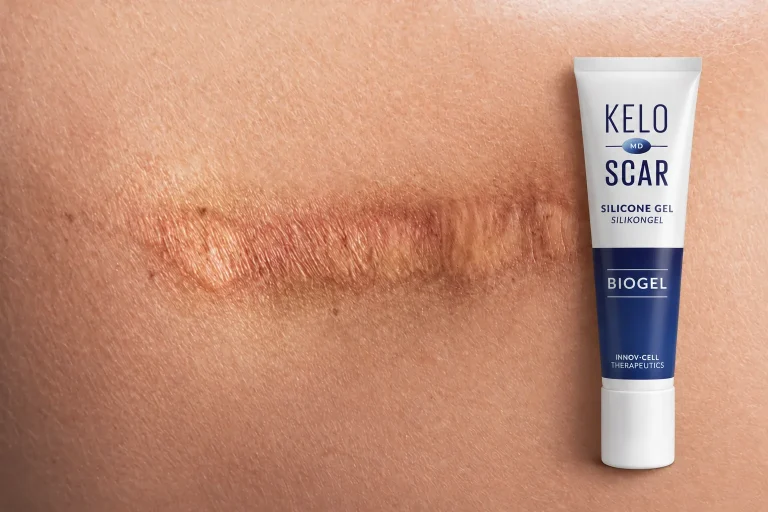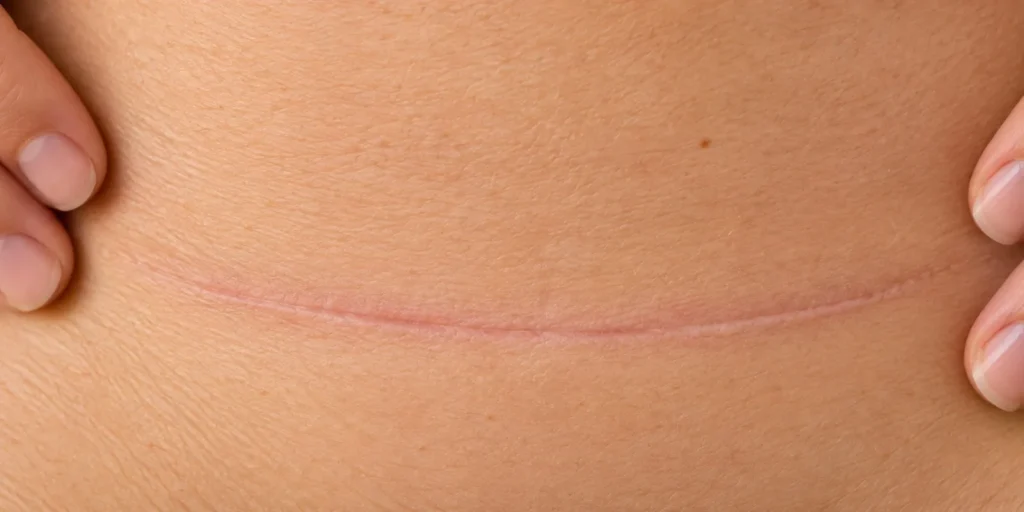
A caesarean section typically leaves a scar along the lower abdomen, just above the pubic area. During the first few months, the scar may look red or raised and feel tight, itchy or sensitive. These changes can be part of the normal scar management process.
Looking after your scar is an important part of your recovery. Once the skin has fully healed, a consistent scar management routine can help support scar remodelling and improve comfort over time.
First, allow your skin to heal
In the first few weeks after your C-section, follow the advice of your obstetrician, midwife or nurse on caring for the incision.
You should only start using silicone gel once the skin is fully closed and healed, with no open areas, scabs or discharge, and once any stitches have been removed, where applicable.
If you’re unsure whether your scar is ready, check with your healthcare professional before starting.
Getting started with silicone gel
Silicone gel forms a thin, flexible protective film over the scar. It helps keep the skin hydrated and reduces friction from clothing, which can be particularly helpful for a C-section scar located close to the waistband.
KELOSCAR BIOGEL is designed for twice-daily application. Here’s how to use it:
- Clean and dry the area. Gently clean your scar and make sure the skin is completely dry before applying the gel.
- Apply a thin layer. Use a small amount of KELOSCAR BIOGEL and gently massage it over the scar.
- Allow it to dry. Wait approximately five minutes before getting dressed. Once dry, the gel forms a transparent, discreet film.
- Repeat twice daily. Apply morning and evening for a recommended minimum period of 60–90 days or as advised by your doctor. If you continue to notice improvements after 90 days, ongoing use is recommended.
Using silicone gel consistently is an important part of scar management. A few simple habits can help you stay on track:
- Find a routine that works for you. Apply your gel at convenient times, such as after your morning shower and before going to bed.
- Use MyDermAssist for extra support. Set reminders for your applications and take periodic photographs to document changes in your scar over time.
- Keep a record of scar-related changes. Note any differences in appearance or comfort, including redness, itching or feelings of tightness.
- Stay connected with your healthcare professional. MyDermAssist organises your photographs and recorded information into a structured progress report that you can choose to share with your doctor.
What changes can you expect?
Scars change gradually. During the months following your C-section, you may notice that your scar becomes softer, flatter or less red. However, results vary from person to person, and some scars may take longer to show noticeable improvement. Silicone gels such as KELOSCAR BIOGEL help maintain skin hydration and support the natural scar remodelling process. With consistent use, they may help improve the appearance of scars and reduce redness, itching, dryness and feelings of tightness.
While no product can completely remove a scar, silicone gel may help make it less noticeable and more comfortable over time.
When should you seek medical advice?
Contact your healthcare professional if you notice increasing pain, redness, warmth or swelling around your scar, particularly if accompanied by discharge or other signs of infection.
You should also seek advice if your scar continues to become thicker, grows beyond the original incision line or causes persistent discomfort.
Pregnancy and breastfeeding
If you are pregnant or breastfeeding, consult your doctor before using KELOSCAR BIOGEL.
Always follow the product’s instructions for use and any recommendations provided by your healthcare professional.
MyDermAssist is intended as a digital support tool for scar management. It does not provide diagnosis, medical advice or treatment recommendations and does not replace clinical examination or the professional judgement of a qualified healthcare professional.
References
- Monstrey S, Middelkoop E, Vranckx JJ, et al. Updated scar management practical guidelines: Non-invasive and invasive measures. Journal of Plastic, Reconstructive & Aesthetic Surgery. 2014;67(8):1017–1025.
- Meaume S, Le Pillouer-Prost A, Richert B, Roseeuw D, Vadoud J. Management of scars: Updated practical guidelines and use of silicones. European Journal of Dermatology. 2014;24(4):435–443.
- KELOSCAR BIOGEL. Instructions for Use (IFU).