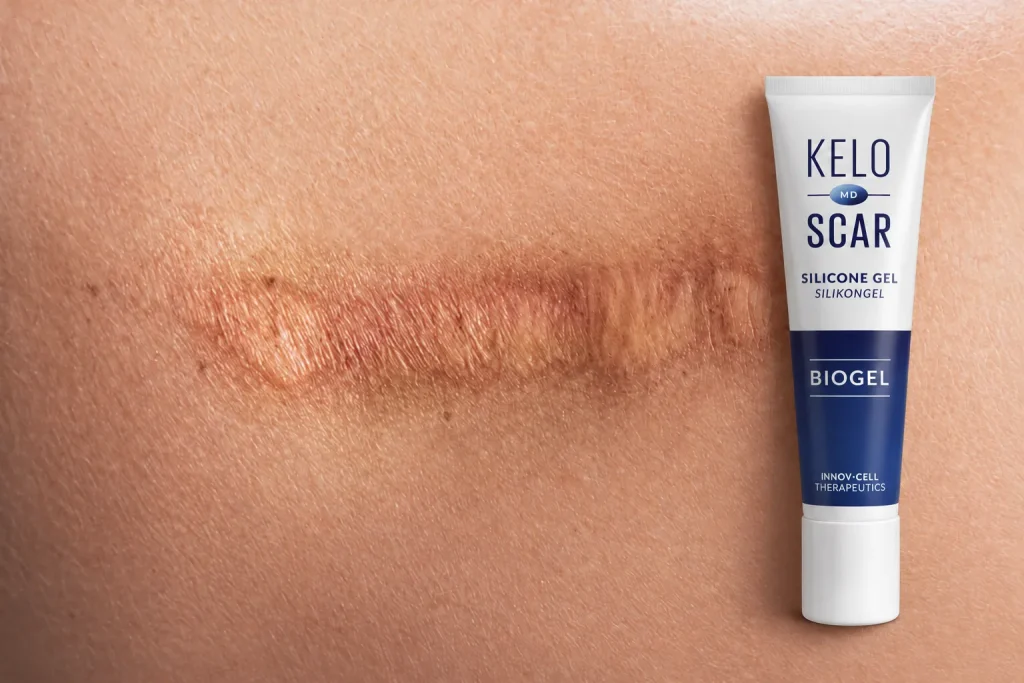
KELOSCAR BIOGEL: how it works and what makes it different
Silicone gel is widely recommended as a first-line option for scar management. It forms a thin, protective layer that helps maintain skin hydration and supports the improvement of scar appearance over time.
KELOSCAR BIOGEL combines medical-grade silicone with TurmeromeCell™, an innovative ingredient containing a liposomal extract of Curcuma longa and vitamin E, recognised for their antioxidant and skin-conditioning properties.
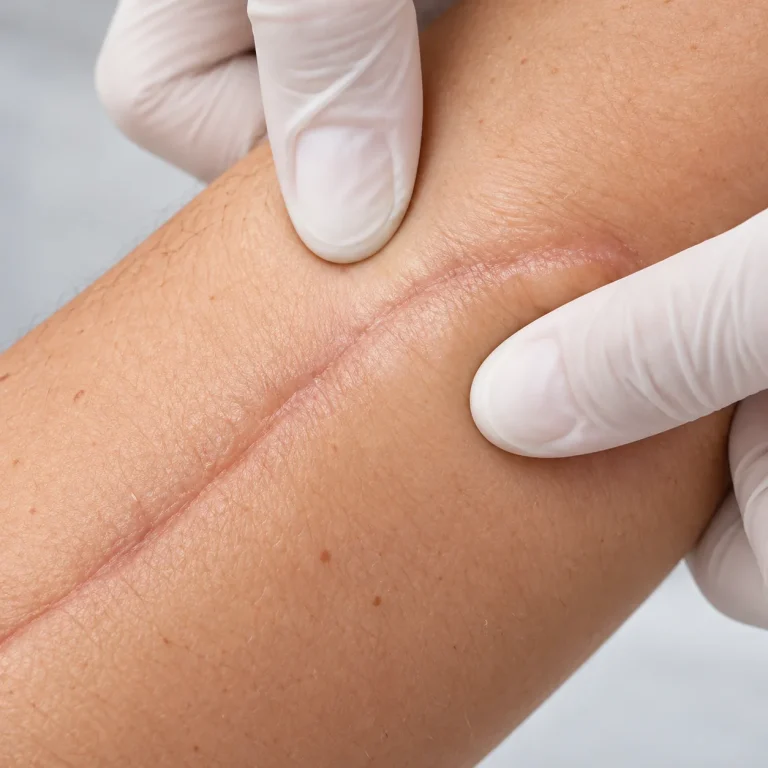
Together, they bring hydration, protection and soothing comfort into one formulation, designed to help manage new and existing scars resulting from:
- Surgery
- Burns
- Cuts and other skin injuries
KELOSCAR BIOGEL is suitable for adults and children aged 3 years and older.
How can KELOSCAR BIOGEL help?
KELOSCAR BIOGEL creates a thin, protective silicone layer over your scar. This helps keep the skin hydrated and supports the natural scar-healing process.
With regular use, it may help:
- Improve the appearance of scars
- Reduce redness
- Relieve itching
- Ease dryness
- Reduce feelings of tightness or discomfort
The gel is transparent, odourless and dries quickly, making it easy to include in your daily scar-care routine, including gentle scar massage if recommended by your healthcare professional.
When can I start using KELOSCAR BIOGEL?
Only use KELOSCAR BIOGEL once the wound has completely healed and the skin is fully closed.
Do not use it on:
- Open wounds
- Broken skin
- Irritated skin
- Infected areas
If you are unsure whether your wound has healed enough, speak to your healthcare professional before starting treatment.
How do I apply KELOSCAR BIOGEL?
- Wash and dry the scar and the surrounding skin.
- Apply a thin layer of KELOSCAR BIOGEL over the scar.
- Allow the gel to dry for about 5 minutes.
For best results:
- Apply twice daily (morning and evening).
- Continue treatment for at least 60 to 90 days.
- Larger or older scars may need a longer treatment period.
- If you continue to see improvement after 90 days, keep using the product as advised.
Consistent daily use gives the best results.
Important information
Stop using KELOSCAR BIOGEL and seek medical advice if you notice:
- Skin irritation
- A rash
- Any unexpected skin reaction
Do not use the product if:
- The packaging is damaged
- The expiry date has passed
Scars improve gradually over time, and results vary from person to person. Always follow the instructions for use and any advice from your healthcare professional.
More questions? See the KELOSCAR FAQs or the step-by-step How to use page.
References
- Mustoe TA, Cooter RD, Gold MH, et al. International clinical recommendations on scar management. Plastic and Reconstructive Surgery. 2002;110(2):560–571.
- Monstrey S, Middelkoop E, Vranckx JJ, et al. Updated scar management practical guidelines: Non-invasive and invasive measures. Journal of Plastic, Reconstructive & Aesthetic Surgery. 2014;67(8):1017–1025.
- Gold MH, McGuire M, Mustoe TA, et al. Updated international clinical recommendations on scar management: Part 1 — Evaluating the evidence. Dermatologic Surgery. 2014;40(8):817–824.
- Mustoe TA, Gurjala A. The role of the epidermis and the mechanism of action of occlusive dressings in scarring. Wound Repair and Regeneration. 2011;19(Suppl 1)–S21.
- Hoeksema H, et al. Scar management by means of occlusion and hydration: A comparative study of silicones versus a hydrating gel-cream. Burns. 2013;39(7):1437–1448.
- KELOSCAR BIOGEL. Instructions for Use (IFU).