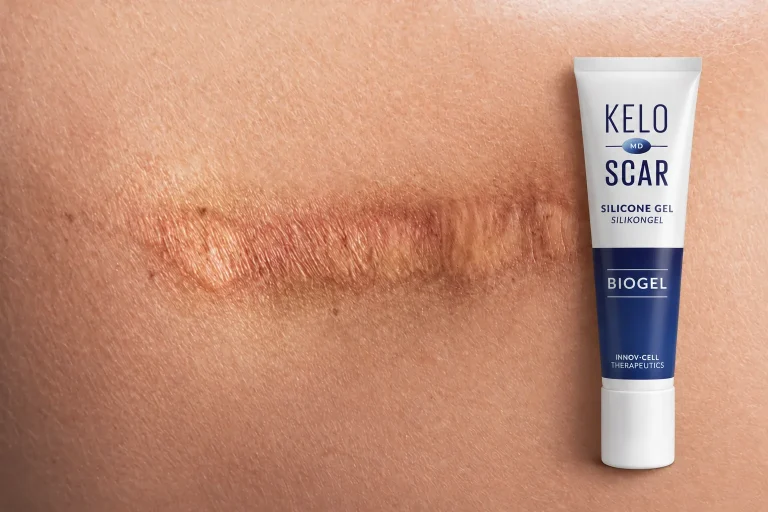
Silicone gel can be introduced into your scar care routine once the wound has completely closed and the skin has fully healed. Understanding when your skin is ready, how to apply the gel correctly and which precautions to follow can help you care for your scar with confidence.
Why timing matters
Scar management is a gradual process that continues for months after the wound has closed. During this time, scars may become raised, red, itchy or uncomfortable, particularly following surgery or burns.
International scar management guidelines recognise silicone gel as a first-line, non-invasive option for scar care. Early use, once the skin has fully healed (a process medically known as complete epithelialisation), is recommended as part of effective scar management.
How to know when your skin is ready
Before applying silicone gel, make sure that:
- The wound is completely closed, with no open or broken areas.
- There is no fluid or discharge from the wound.
- All scabs have naturally fallen away, leaving the skin surface intact.
If you are unsure, consult your healthcare professional.
How to use silicone gel
Once your skin has fully healed, incorporating KELOSCAR BIOGEL into your daily routine is simple:
- Clean and dry. Gently cleanse the area and pat it completely dry.
- Apply a thin layer. Use a small amount of KELOSCAR BIOGEL and gently spread it evenly over the scar.
- Allow it to dry. Wait approximately 5 minutes for a transparent film to form. Remove any excess product if necessary.
- Maintain a consistent routine. Apply twice daily for at least 60 to 90 days. Larger or older scars may require a longer period of use.
Important precautions
For safe and effective use, keep the following recommendations in mind:
- Do not apply silicone gel to open wounds, broken or irritated skin, or mucous membranes.
- Avoid applying it simultaneously with other topical medicines unless advised by a healthcare professional.
- Discontinue use and seek medical advice if redness, itching, blistering or pain develops.
When to consult a healthcare professional
Although scar changes are a normal part of the scar care process, certain signs may require medical attention.
Consult your healthcare professional if your scar extends beyond the original wound, continues to grow, becomes increasingly painful or itchy, restricts movement or shows signs of infection.
Follow your scar’s progress with MyDermAssist
Following how your scar changes over time can help you stay informed throughout the scar management process.
With MyDermAssist, you can take consistent photographs of your scar, record how it looks and feels, and create progress reports to share with your healthcare professional.
MyDermAssist is a digital support tool designed to assist with scar management. It does not provide diagnoses, medical advice or treatment recommendations and is not a substitute for clinical examination or the professional judgement of a qualified healthcare professional.
References
- Mustoe TA, Cooter RD, Gold MH, et al. International clinical recommendations on scar management. Plastic and Reconstructive Surgery. 2002;110(2):560–571.
- Monstrey S, Middelkoop E, Vranckx JJ, et al. Updated scar management practical guidelines: Non-invasive and invasive measures. Journal of Plastic, Reconstructive & Aesthetic Surgery. 2014;67(8):1017–1025.
- Meaume S, Le Pillouer-Prost A, Richert B, Roseeuw D, Vadoud J. Management of scars: Updated practical guidelines and use of silicones. European Journal of Dermatology. 2014;24(4):435–443.
- Gold MH, McGuire M, Mustoe TA, et al. Updated international clinical recommendations on scar management: Part 2 — Algorithms for scar prevention and treatment. Dermatologic Surgery. 2014;40(8):825–831.
- KELOSCAR BIOGEL. Instructions for Use (IFU).